A repeated catch tells you where, not necessarily why
The door may scrape at one side, hesitate around the curved guide, or stop at the same point. Those observations help locate the concern, but rollers, hinges, lifting balance, and track supports can all contribute. The visible contact area is a starting point for investigation rather than proof that only one rail needs adjustment.
When a search for garage door repair near me follows a displaced roller or tilted section, do not continue cycling the door. Do not pry the track apart or pull the sections into place. Keep the area clear and leave an open or unsupported door connected as found until it has been assessed.
Position, shape, and support all matter
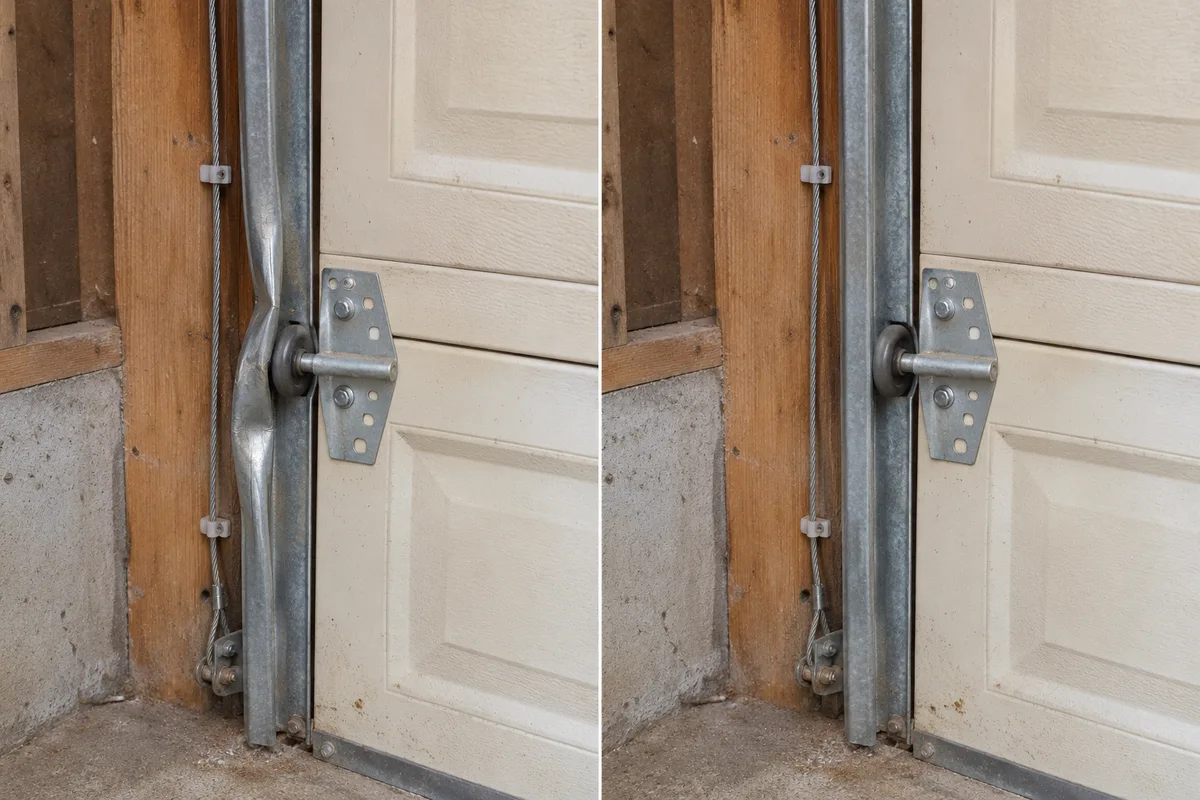
The vertical guides, curved transitions, and horizontal runs need the right relationship to each other and the door hardware. A rail may appear straight while being twisted or mounted poorly. Supports can move, and worn hinges can alter how a section enters the path. The inspection should consider these relationships together.
For garage door repair in Natick, MA, suitable work may involve adjustment, compatible replacement parts, or attention to the mounting arrangement. Ask whether the damaged component can still perform its guiding function. Making the motor pull through one test cycle is not the same as restoring stable support and intended clearance.
Tell us about impacts and earlier work
A vehicle bump can affect more than the area it touches. Force may pass into rollers, hinges, guides, or mounting points. Uneven cable lifting can also push a door against its tracks. Mention the event even if the obvious bend looks small, and explain whether the door was operated afterward.
If the same catch has returned after a previous adjustment, that history is useful. A repeated fault may involve another component rather than a rail that simply needs moving again. The assessment should explain the underlying cause and any related damage before deciding on the repair.
Restore the guide path, then review travel
After appropriate parts and supports are addressed, the door needs to move through its intended path with secure roller engagement. Alignment should remain stable as the sections change direction. Continued rubbing, shifting, or unusual force means the remaining condition needs investigation rather than stronger opener settings.
A garage door repair service near me should also understand access around the guides. Tell us about stored items, limited headroom, or restricted side space. Clear only what is safely reachable; do not reach beneath an unstable section or move a car through the affected opening.
Discuss a track assessment in Natick
Reach Xavier at (774) 221-7513 between 8am and 8pm, Sunday through Saturday. Related issues are explained under roller replacement and cable repair. Once normal movement is restored, maintenance can help review other wear. Confirm coverage directly for nearby properties before planning an appointment.
Questions before you call?
Can I straighten a track with household tools?
Do not attempt makeshift reshaping. The guide profile and support affect how the door is held, and the damaged mechanism may already be unstable.
Does an off-track door need a new door?
Not automatically. The condition of sections, guides, supports, and lifting hardware determines the options. Ask what the inspection shows before deciding on replacement.
Why inspect rollers during track repair?
The wheels and stems follow the track and influence section position. Wear or damage there can cause contact and can affect the result of an alignment repair.
Is it safe to pull the door past the tight point?
No. Forcing movement can increase damage or displace a roller. Stop operating a binding door and arrange an assessment of its support and path.
What happens after track work?
The door should be reviewed for intended clearance, stable support, and consistent guidance through travel. Any remaining resistance or related hardware issue needs to be explained.